
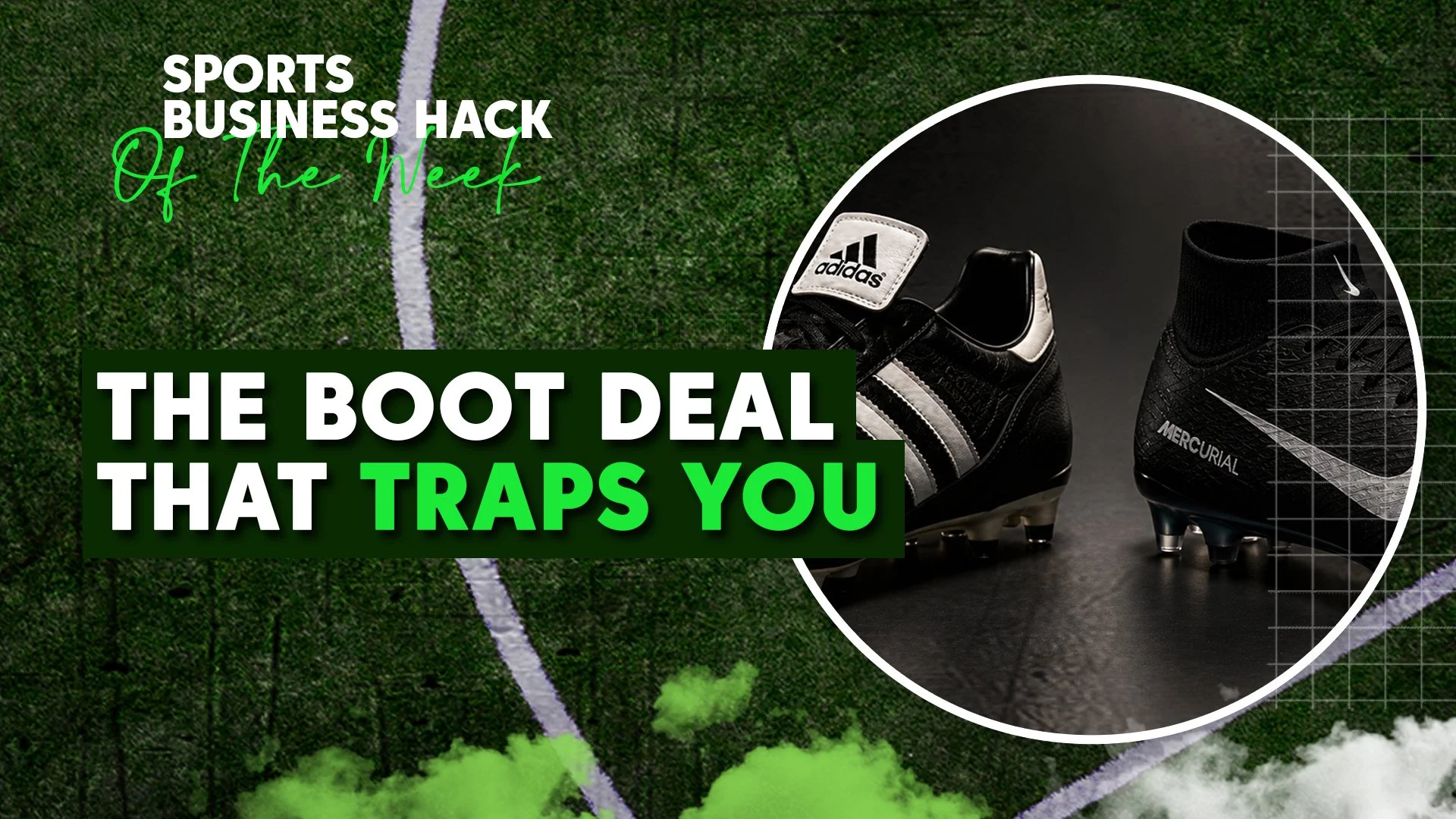
This one goes out to every athlete manager, athlete, and parent of a young athlete. The wording of your commercial endorsements could cost you far more than you think.
When a young footballer signs their first boot deal, everyone around them is excited. The player, the agent, the family. It feels like a rite of passage, a sign that they've made it. It separates them from the players who don't have one, it's a status symbol.
And in that eagerness to get it signed, the player, in the absence of good advice, often ends up giving away the majority of their commercial inventory in a contract that also doesn't even reflect their increase in value as their profile grows.
THIS IS CALLED CATEGORY CREEP.
Brands like Adidas or Nike will naturally try to capture as broad a scope as possible:
footwear, apparel, training kit, base layers, socks, caps, gloves, bags. That's expected
but if left unchecked, they go further: Eyewear. Fragrance. Watches. Products they sell but aren't primarily known for. And if the player signs without scrutinising the deal, all of those potential commercial opportunities now belong to the brand.
I've seen young players locked into 4-year boot deals on a value-in-kind basis, (which
means free boots and nothing else), while simultaneously surrendering categories worth significant standalone revenue if their career progresses. When you add in first right of refusal, that first deal that felt like you'd made it, becomes the thing that limits everything that comes after it.
LOOK AT THE ATHLETES WHO GOT THIS RIGHT:
• David Beckham has been an Adidas athlete but maintained commercial partners across categories where Adidas also have products. He was with Breitling for years before moving to Tudor.
• Patrick Mahomes partnered with Oakley for sunglasses despite being a Nike athlete.
Their advisors carved out lucrative categories from the potential creep of their primary brand deal.
The same principle applies between players and clubs:
When a player signs, the club's image rights contract will typically prohibit the player's company from doing personal deals with any competitor brands across the club's 20 to 30 commercial partner categories. That's a significant restriction on independent earnings. And most players just accept the blocked list and move on.
And it's not limited to players:
When José Mourinho was appointed Manchester United manager in 2016, the deal was held up by a personal endorsement deal with Jaguar, because United's shirt sponsor was Chevrolet, on a seven-year deal reportedly worth £53 million per season. A simple category conflict that was significant enough to delay one of the biggest managerial appointments in Premier League history while the commercial teams resolved the clash. He also had deals with Hublot and a South Korean casino operator, both of which needed agreements with United's existing partner list.
👉 THE HACK THIS WEEK IS TREATING EACH RESTRICTED CATEGORY AS A
PRICED ASSET.
List them explicitly in the image rights schedule from day one. Ensure the club can't add new ones mid-term without written agreement. And if the club blocks a legitimate commercial offer, the player is either compensated via a defined fee or the club provides a waiver allowing the deal to proceed.
Whether you end up working as an agent, at a club, or on the brand side, understanding category creep changes how you evaluate every endorsement deal you're involved in. The headline number is like the bright, glossy lights, but the restricted categories underneath it are where the real value lies.