
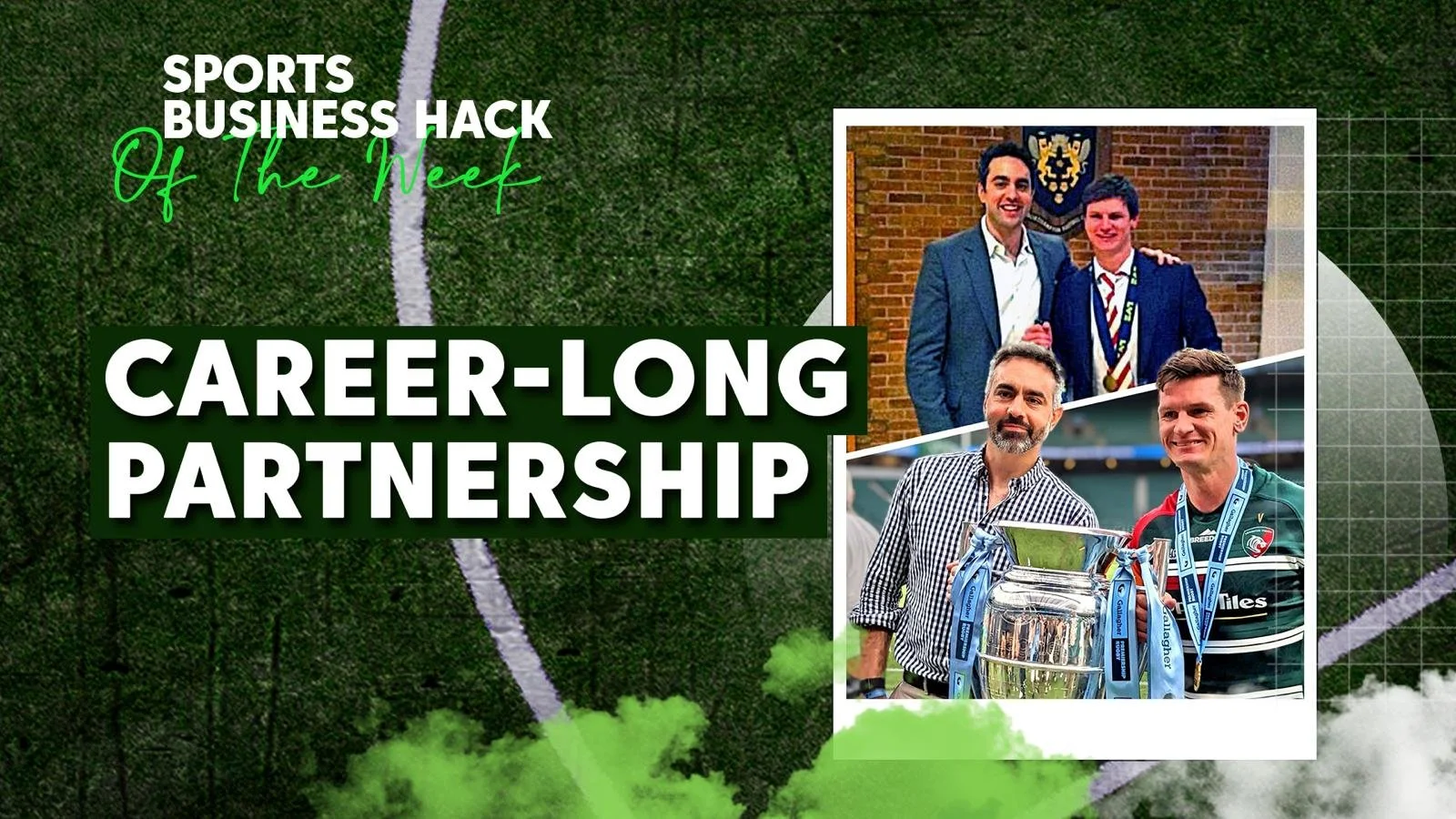
My hack this week is simple but overlooked: invest disproportionately in your earliest relationships. Those first clients, when both of you have something to prove, often become your most loyal. You grow together and their success becomes the best possible advert for your services.
Most agents think about the next deal. The smartest agents think about the next decade.
Because the most valuable client relationships in sport are long term partnerships that span entire careers. Being a good athlete manager is about guiding a human being through the highs and lows of a 15-year professional journey. If both you and your client do it well, it can become the framework for the early years of your business.
My own experience of this was with England rugby international and Premiership winner, Freddie Burns.
“Nick has been so much more than an agent to me, he has become like family” Feddie Burns
I signed Freddie when he was 18 years old. I would have been about 26 at the time. We were both early in our careers, still learning, still finding our feet.
From the start, we got on well. There was mutual respect. I respected him as a player and as a person. He respected me as his agent and advisor. Over time, that relationship deepened, and our careers grew alongside each other.
As Freddie became a more senior player, I became a more senior agent. When he became an England international and a Premiership winner, I became the agent of an England international and Premiership winner. My reputation in the industry grew alongside his success.
But the real power of that one strong relationship was that it compounded.
From that relationship I signed Freddie's flatmate, David Lewis, who played for Harlequins. I signed Freddie's younger brother, Billy Burns, who became an international for Ireland. I signed Billy's best friend, Elliot Stooke, who had stints in Japan and France. After Billy moved to Ulster, I signed Billy's teammate at Ulster, John Cooney a brilliant Irish international who I moved through a couple of renegotiations at Ulster, then on to Brive in France.
Like a family tree of clients who all stemmed from one strong relationship. It came from people watching how I worked with Freddie, and deciding they wanted the same standard of representation.
One well-managed career can create a network effect. Your reputation, proliferated by social media and word of mouth,becomes your marketing campaign.
Alongside playing contracts, there were commercial deals. Sponsorships, brand partnerships, exposure opportunities. Negotiating those deals sharpens your experience, grows your network beyond your sport and your personal brand grows. People start to associate you with professionalism and delivery.
We learned on the job. It was rooted in respect and performance. His on the field, mine at the negotiating table. But it was also rooted in genuine friendship and connection. That depth matters more in this industry than people realise.
When you're starting out, you don't need fifty clients. You need two or three who genuinely trust you. Service them properly and that depth of service gets noticed by everyone around them.
This shows what representation can look like when it's done properly. It can be financially successful, professionally purposeful, and personally rewarding. And in my case, it didn't just shape one career. It helped build the foundations of my business.
So if you're early in your career as an agent, manager, or any client-facing role in sport, resist chasing volume for volume’s sake. The thought is - more clients, more deals, more activity. But the reality is that the compounding effect of one strong relationship, properly maintained over a decade, will outperform a scattered portfolio of transactional deals every time.
The hack: treat your first clients like they'll define your next fifteen years. Because they just might.