
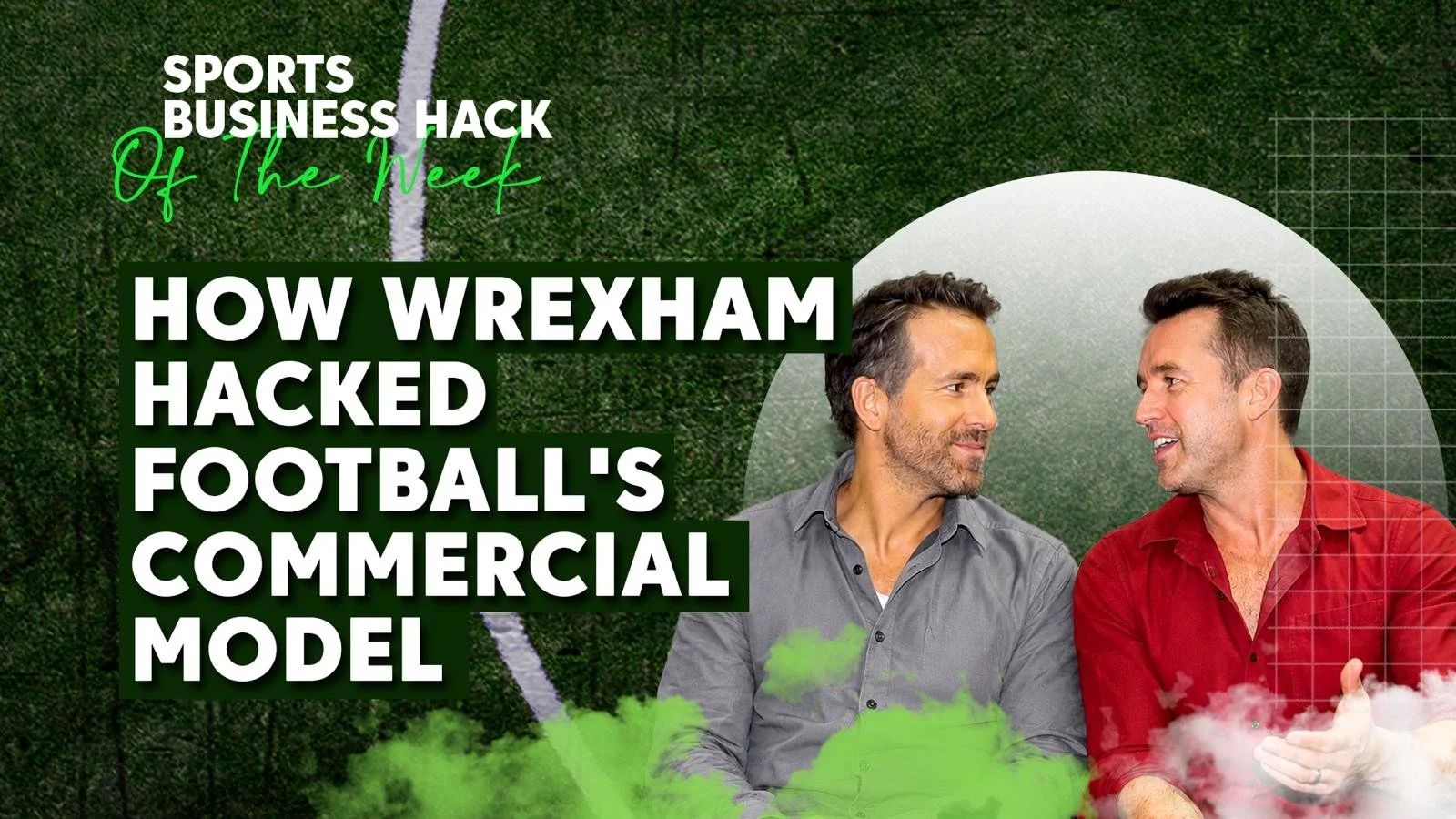
When Ryan Reynolds and Rob McElhenney bought Wrexham AFC in 2020, most people in football didn't take it seriously. Two Hollywood actors buying a fifth-tier Welsh club valued at roughly £2 million. It looked like a vanity project.
It turned out to be one of the most effective club acquisitions in modern sport.
Between them, they had access to broadcast networks, A-list talent and corporate relationships that no fifth-tier club could ever reach on its own.
But what really separated them from every other celebrity investor was one primary thing - that they so visibly care about the club.
Reynolds lives in New York. McElhenney lives in Los Angeles. Wrexham is a small city in North Wales that takes real commitment to get to from either location. And yet both have been at the Racecourse Ground consistently, season after season. Reynolds even bought a house in Marford, 5 miles from the ground. At games you can see it on their faces. The tension, the celebrations. These aren't absentee owners collecting a football club like a distant business portfolio asset. The fans could see that. The sponsors could see that. And that authenticity became the platform upon which their social status and commercial engine was able to operate and be translated effectively onto the club.
Their first move was commissioning the FX and Disney+ docuseries "Welcome to Wrexham". It generated over $3.2 million in direct revenue, streamed in over 190 countries, and by Season 4 in May 2025 had turned a National League club into a globally recognised brand. For most fans, particularly in the United States, their first connection with Wrexham came through Disney, not through football.
The second move was a TikTok shirt sponsorship in 2021. TikTok wanted credibility in football. Wrexham wanted reach with a younger audience. Both sides traded something the other needed. Within one week, Wrexham gained 538,000 TikTok followers. By 2023, they were the fastest-growing football account on the platform generating more social media momentum than most Premier League sides.
The third move was pure Reynolds. In 2023, he teased a club "name change" to Wrexham United. Fans panicked. The reveal was that United Airlines had become the new shirt sponsor. The announcement video hit over 20 million views in 48 hours and triggered a record spike in shirt pre-orders. You create the story, let the audience react, and the sponsor receives more earned media than any perimeter board could deliver.
Then came the Super Bowl. In 2024, Sir Anthony Hopkins appeared as "Wrex the Dragon" in a Wrexham campaign during the biggest broadcast event in American sport. In 2025, Channing Tatum featured in a follow-up. A club that five years earlier was playing non-league football was now advertising during the Super Bowl.
The financial arc tells the full story. Revenue hit £26.7 million in 2023/24. The club's valuation went from roughly £2 million in 2020 to an estimated £150 million by 2025. Three consecutive promotions on the pitch, and a commercial operation that is the envy of most Premier League clubs.
And that footballing success has added the fuel that the commercial engine needed. Full credit to Phil Parkinson, Shaun Harvey and Les Reed at the club who have funnelled the global platform into astute and effective signings who have delivered results on the pitch. That role shouldn't be understated. Without the rise through the leagues, Wrexham wouldn't have sustained the continued attention that has earned its status as many people's second club.
Celebrity investor buys club and uses their platform to grow it. Seems easy right? But here's what I think is important about why copying this is harder than it looks.
Since Wrexham's success, you've seen Tom Brady at Birmingham City, Snoop Dogg and Martha Stewart investing in Swansea, JJ Watt part-owning Burnley. Everyone wants their own version of what Wrexham built. But the celebrity investor has become a structural expectation now, and the novelty has worn off. The returns are diminishing because the provenance of Wrexham's success was authenticity.
The lesson applies well beyond Wrexham and well beyond football. If you can build a compelling narrative around your property and back it with genuine commitment, the commercial opportunities follow. Emotional connection drives fan growth, and fan growth drives commercial revenue. Wrexham's commercial income went from £1.9 million to £13.2 million in a single year, with over half of their total revenue now generated outside Europe.
Wrexham proved that you don't need to be in the Premier League to build a global commercial platform.