
We often read about players forcing an exit by refusing to show up to training: (Isak at Newcastle, Wissa at Brentford, Dembélé at Dortmund). But when a club wants a player out, they'll often use every means possible too.
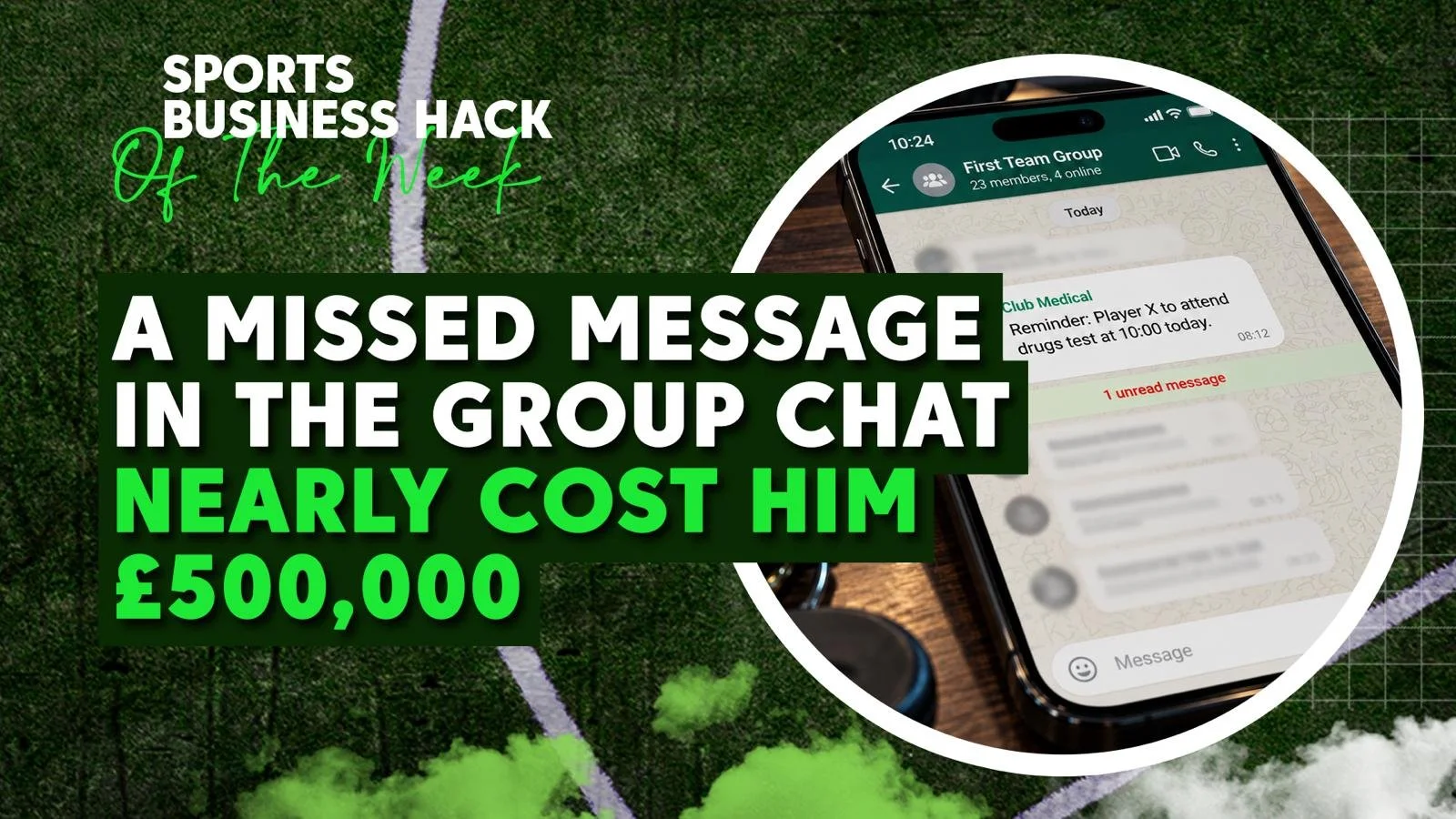
My player missed one message in the group WhatsApp, and his club tried to use it to end his contract, with £500,000 still left on it.
His name was one of around 10 named in the team whatsapp group who were messaged mid-training and told they had to stay behind for a drugs test. By the time he had showered after training the team whatsapp group had filled with other bits of banter an the usual memes, and the message in question was quite far down the scroll. My player's wife was heavily pregnant and they lived an hour from the training ground, so as soon as he'd showered he was out the door and down the motorway.
He was 30 minutes down the motorway when the club rang.
After some verbal exchanges about how disorganised the whole process was, he turned the car round at the first motorway exit and drove straight back. He arrived about 15 minutes after the test was due...and the tester had already left the building.
I found out straight away, and knew we were in trouble.
The background:
He was in the last year of his contract and hadn't played for several months after falling out of favour. If it was an option the club would want him off the wage bill, terminating his contract would free up salary for other signings, and a missed drugs test gave them the opening.
From a cold business perspective, I understand the logic. A player the head coach won't pick, in the last year of his contract, is £500,000 of salary a club can't spend on anyone else.
From an athlete management and human perspective, it was reprehensible.
The club weren't interested in the detail of what had happened or any reasons. They stuck to the narrative of a missed drugs test, and by the time we walked into our meeting, they'd already drafted a public statement.
We had very little time to get our ducks in a row, and 3 things decided it:
1️⃣ The lawyers: we brought in the best sports lawyers in the country for this type of situation (Sheridans prepared the statements and correspondence), and arranged an immediate test with a registered, independent tester to prove a negative result and remove any suggestion he'd missed it deliberately.
2️⃣ The timeline: thankfully, and this was key to our defence, his WhatsApp showed he'd opened the message a few minutes after the club rang him, so we could prove that he'd hand't seen it and never been properly informed. Even better, his Google Maps data showed the car turning round at the first exit, and video footage showed his car leaving the ground and coming back in.
3️⃣ The club's own mistakes: staff had seen him several times between the end of training and him leaving, and nobody checked he'd seen the message. And once we took a statement from the tester, it was also clear nobody had asked the tester to wait an extra 15 minutes while the player was on his way back.
Our counter-narrative was that the club had failed the player and were now hanging him out to dry.
The meeting:
The Chairman and CEO came with 2 independent representatives. On our side it was me and the player, with everything the Sheridans team had prepared.
Most weeks my strategy is collaboration. But that wasn't going to work today. The club had no interest in collaboration, they had an agenda. The statement was already written, and the only thing that was going to move them was the cost of carrying on.
So we went in with coercive diplomacy. We were as cold and factual as possible about the ramifications for the club if this went public, with every point laid out, from their breaches of the testing policy right down to the read receipts. (We were ready for everything apart from the list of lengthy expletives the player had used when he got back to the club and found the tester gone. Hearing that being read out in the meeting was about as funny as it was damaging to our argument)
In the end it was a stalemate, which was as good a result as we could have hoped for.
The club knew we'd built a plausible case, and the collateral damage on their side was worth more than the £500,000 they'd save by terminating his contract.
The result was that he got a formal warning from the club and nothing else. There was no public statement, and unsurprisingly, a few days later we received the magic words in writing: no violation would be pursued.
His contract stood. The following season he signed for a different club, and we all moved on on good terms.
The side of this job nobody advertises:
If you're thinking about becoming an agent or athlete manager, most of what people see is the negotiating. The calls that protect a career come with no warning, you need to be educated to deal with them, and what you do in the first few hours often shapes everything after it.
💡 Lesson: whether you're club side or player side, the adversarial part of this job can unfortunately extend well beyond contract negotiations. Once a deal stops working for one side, the wheels can come off and everything becomes leverage.