
In many cross-border transfers, the two clubs can't really communicate with each other. Other than the universally understood numbers, every clause, every interpretation, every objection travels through whoever sits in the middle.
In many of my biggest deals, that seat belonged to me.
And I got that seat for nothing. My parents moved us to France when I was 4 and Spain when I was 6. I hated those first weeks in a French nursery, understanding nobody, and then again in Spanish school. But....by 7 I was trilingual, and I can attribute 90% of my career success to what happened before that seventh birthday.
My first football deal ran on nothing else but French knowledge. In 2010 I moved a young Australian called Kieran Baccus from Sydney FC to Le Mans in France, off the back of 12 months spent talking to French sporting directors and academy directors in their own language. I still have the red signed shirt.
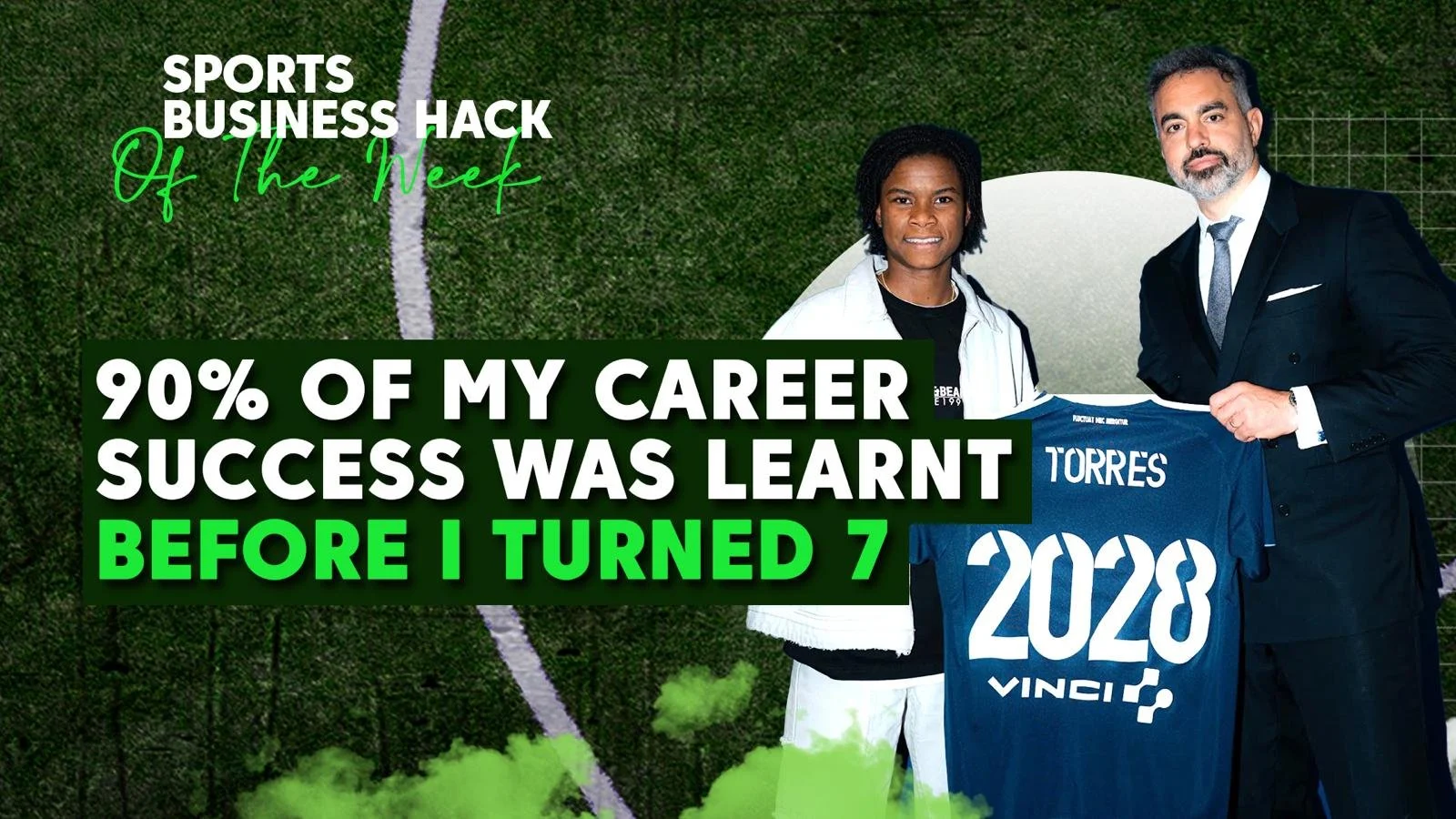
One of my most recent deals was the same story with more borders in it: a Colombian footballer into a French club, a year after I'd moved them to England. Three countries, three languages, nothing lost between them.
And the pattern across 19 years is obvious. Most of my biggest moves have been international players coming into England. People open up faster in their own language. You stop being an outsider trying to do business and become someone they can work alongside. Introductions turn into relationships, and relationships turn into deals 🤝
The structure of world football explains why this edge exists, and why it isn't going anywhere:
Nearly 70% of Premier League players are foreign nationals, with Serie A and La Liga at similar levels.
The 3 official languages of FIFA and CAS are French, Spanish and English.
The 4 countries exporting the most players on the planet are Argentina, France, Brazil and Spain.
So French & Spanish covers most of the global flow of talent... and yet most operators in England carry no second language.
That gap is where the international work goes.
🚨 Two of the biggest guest speakers on my Sports Business Accelerator cohort built their careers on languages.
Juan de Dios Crespo has been the lawyer for Messi, Neymar, Zidane, La Liga, Real Madrid, Valencia and many others, and he's the man who walked the €222 million cheque into La Liga's offices to force through the biggest transfer in history. He works in English, French, Spanish and Italian, and his case to our cohort was mine in different words:
Then there's the weaponised version. When Messi was banned 4 matches for words said to a match official, Juan's appeal turned on language itself. He went through the Brazilian referee's entire career and showed 152 matches officiated with Spanish-speaking players to prove his closing argument. The ban was overturned, and Messi played the qualifiers Argentina needed on the road to the World Cup ⚖️
Erkut Sogut, who ran Mesut Özil's career and is now Managing Director of MLS side DC United, 3 non-negotiables for anyone trying to enter this business: hard work, trustworthiness, and languages. The son of Turkish immigrants in Germany, fluent in German, Turkish, Spanish and English, his own line on it is the best I've heard:
Being an immigrant, you actually start 2-0 up. You grow up in two cultures, and you usually know two languages.
And before anyone says AI closes this gap: the apps make it easier to fire off a message in Dutch. Nobody is writing legally binding contracts through ChatGPT, and in-person multilingual dialogue is where deals actually close.
So my hack this week comes in 2 parts:
1️⃣ Already speak a second language: put it to work. Call the clubs in that territory. Build relationships with the agents who speak it. Start bringing the opportunities that only exist because you can hold that conversation. A USP only counts when it's working for you.
2️⃣ Don't speak one yet: the best time to start was back at nursery. The second best time is today. Pick the language that fits the market you want to work in and give it 10 minutes a day. Within 12 months you'll be somewhere completely different, and within 24 you'll be adding real value. All for the time it takes to drink a coffee or play one game of FIFA.
Every 10-minute session is a small investment in something most people will never start, and that's why it pays off.
It all starts with 10 minutes a day. And it's still one of the most valuable habits you'll ever build.