
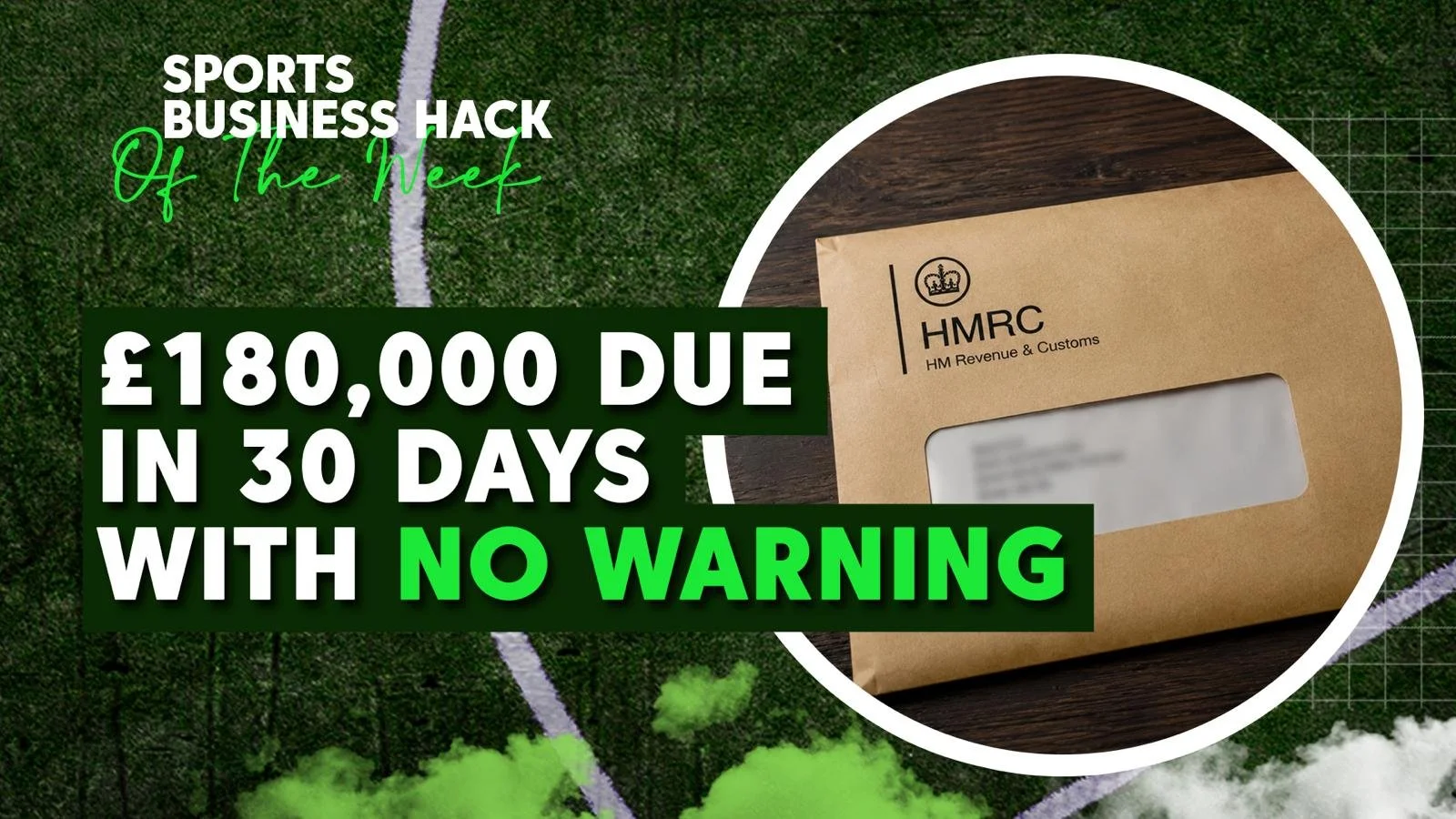
It's a Tuesday in January. A Premier League midfielder gets back from training, makes a coffee and goes through his post at the kitchen counter.
There's one brown envelope with HMRC printed across the top.
It's a demand for £180,000. Due within 30 days!
He opens his banking app and there's no extra income it's taxing. No payment, no invoice, nothing.
So he calls his accountant, who checks and calls back with the worst answer: it's real.
The bill is for money he never received. It's for his agent's commission, paid straight from the club to the agency, in the transfer he signed 18 months ago. HMRC taxed him for it, and nobody had warned him it was coming.
That scene plays out across football every January.
Here's the mechanism:
When a club pays the player's agent on the player's behalf, HMRC classifies it as a benefit in kind. Same principle as a company car or private medical insurance: someone else paid and you're taxed on the value.
For a Premier League player, the rate is 45%.
So if the agent's commission across a season is a few hundred thousand pounds, the player's tax bill on it runs well into six figures... and it repeats for each season the agent is receiving commission.
Because the money never passed through the player's account, nothing was set aside for it.
That's when the relationship damage starts. It's a problem for the player, and the agent who stayed silent, or didn't know. And the tension grows every subsequent season as the player is wondering what the agent has actually done for him over the last few years (think of Eddie Murphy's skit, "What have you done for me lately?")
The fix should be negotiated in before anything is signed.
It's called the gross-up clause, and it´s what the best negotitors are factoring in over the last few seasons. You build an additional bonus into the contract from day one, usually payable each January, just before the self-assessment deadline. The net amount of that bonus covers the tax on the agent's commission, so when the bill arrives, the money to pay it is already sitting in the player's account.
It sounds like a tax avoidance scheme, but it's simply an additional bonus, taxable in its own right.
When I'm negotiating, what the deal pays is only part of the strategy, because every clause has a purpose and if you don't understand them you're disadvantaging yourself and your client.
If you like these insights and want to get into or progress up the sports industry, I'm hosting a free live webinar, Get a Job in the Sports Industry Before 2026 Is Over, on Wednesday 2nd September at 5pm UK time.