
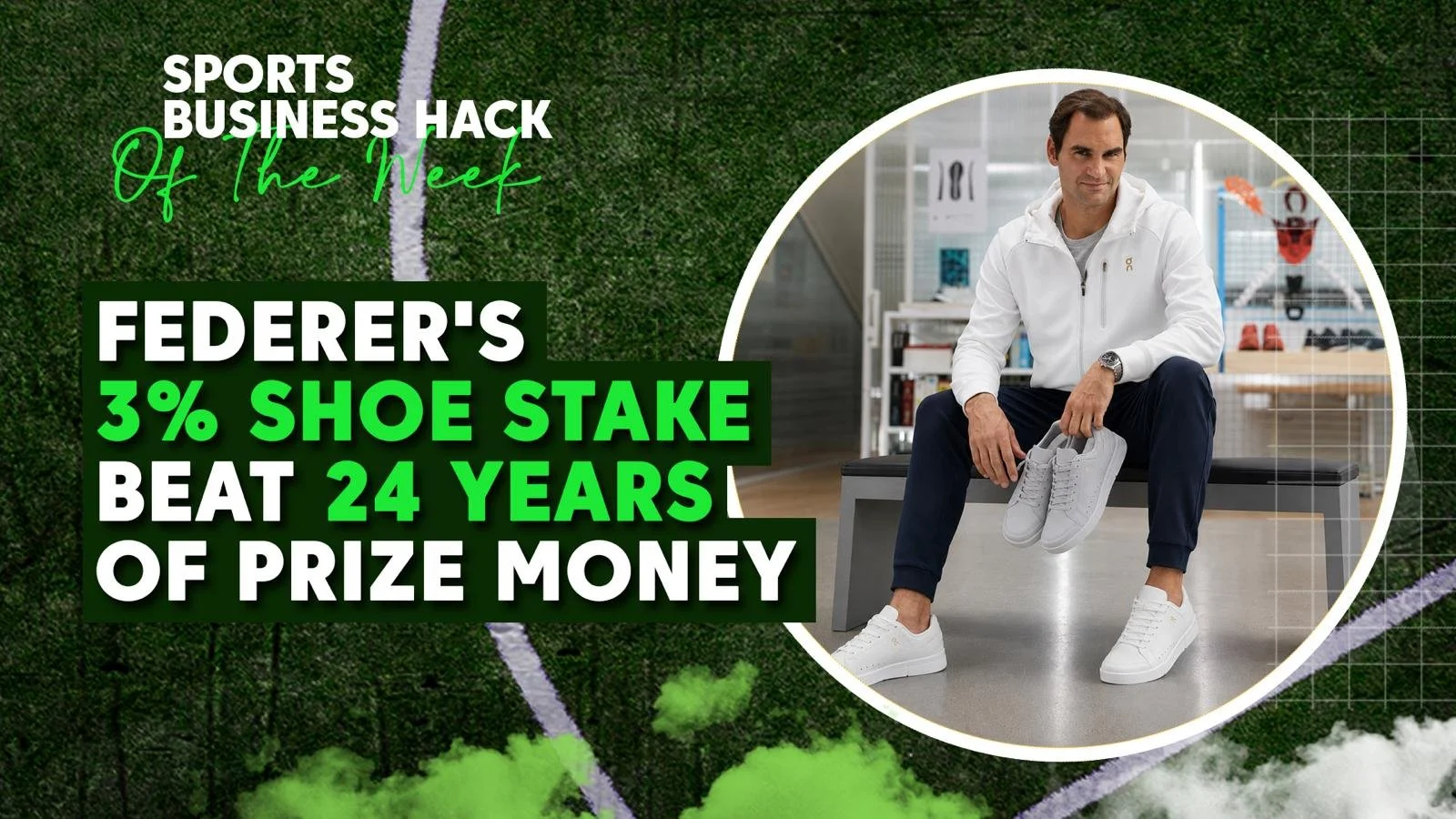
When On Running approached Roger Federer about being an ambassador, rather than taking a fee, he put $50 million of his own money into the business at preferential valuation rates.
His 3% stake was worth over $360 million when On listed in 2021, nearly 3 times the $130 million he earned in prize money across 24 years of tennis. By 2025 it was reportedly closing in on $500 million.
🏀 Michael Jordan's entire NBA career paid him around $90 million in salary.
Jordan Brand now pays him around $250 million every single year in royalties, and it made him the first athlete billionaire.
🍕 LeBron James put under $1 million into Blaze Pizza in 2012, then walked away from his McDonald's partnership to keep the deal going. By 2017 the stake was worth over $40 million.
The rational behind these approaches is the same:
They stopped renting their names out and started charging ownership for them.
And it runs right across the top of the market. For the world's wealthiest athletes, less than 10% of their wealth came from salaries or prize money. The other 90% is sponsorship, licensing, equity and ownership.
There are 3 reasons it works.
1️⃣ Maths: a fee is fixed on the day you sign it... equity revalues every time the business grows. And the athlete is the growth. Federer joined On's board and designed his own shoe line. LeBron posted himself eating Blaze after games. When your name is the marketing engine, a flat fee pays you once for value you create for years.
2️⃣ Longevity: fees stop when the deals stop, and the deals stop when the playing does. Jordan hasn't played a competitive minute since 2003, and Jordan Brand pays him more every single year than his whole playing career did 📈
3️⃣ Leverage: at the very top, the brand needs the name more than the athlete needs the money. When that's the balance of power, the fee is the floor, and ownership is what sits above it.
So if you're advising players at that (highest) level today, equity has to be part of the conversation. Equity plus cash for most deals. Equity instead of cash where the player's balance sheet allows it and the business deserves it.
⛔️ That last word is where the advisor earns their money, because equity in the wrong business is expensive.
Naomi Osaka took a stake in FTX and was partly paid in crypto... the exchange collapsed and the deal went to zero.
Tom Brady's Autograph rode the NFT cycle up and straight back down.
Michael Johnson's Grand Slam Track had the profile, the vision and the expertise, and still filed for bankruptcy. Athlete status can create attention, but it can't carry a weak model.
Which means the job has doubled in size. The traditional negotiation runs across 7 levers, with the guaranteed retainer at the top of the list. The equity conversation starts earlier and goes deeper: who founded the company, what the revenue looks like, who else sits on the cap table, how much runway is left, what happens to the stake in a sale.
You're doing the work of an investor before you do the work of an agent.
The instinct doesn't stop at brand deals either. Serena Williams runs a $111 million venture fund. Shaquille O'Neal owns or has owned stakes in hundreds of franchises. Ronaldo owns the CR7 IP outright, with an Instagram presence valued at around $1 million a post to distribute it through.
One thing to be clear on: This is the top of the market. Federer, Jordan and Messi could command ownership because the brands, and now the clubs, needed them more than they needed the money. For the other 99% of athletes, the retainer is still the deal, and correctly so. But the direction of travel is set.